
By using our website, you agree to the use of cookies as described in our Cookie Policy
How Neuro-Optometric Rehab Helps After a Head Injury
Head injuries change how your brain handles vision. The effects stick around - not just for days, but months. Here in Surprise, people struggle with basic tasks they used to do without thinking.
Your brain and eyes stop working as a team. You deal with:
- Words that split into two on the page
- Screens that blur, even with perfect glasses
- A world that feels tilted and unstable
- Normal light that hits like a hammer
- Objects that jump when you try to follow them
- A constant spin that gets worse in crowds
This isn't minor stuff. It messes with your job. Makes driving scary. Turns simple errands into obstacle courses. But sitting around won't fix it. You need neuro-optometric rehabilitation - targeted training that gets your brain and eyes talking again.
Regular Eye Tests Miss The Point
Basic vision tests check if you need glasses. They don't catch the deeper damage from head trauma. Your eyes might work fine, but your brain scrambles the signals. That's why people pass standard tests but still can't read a menu or drive at night.
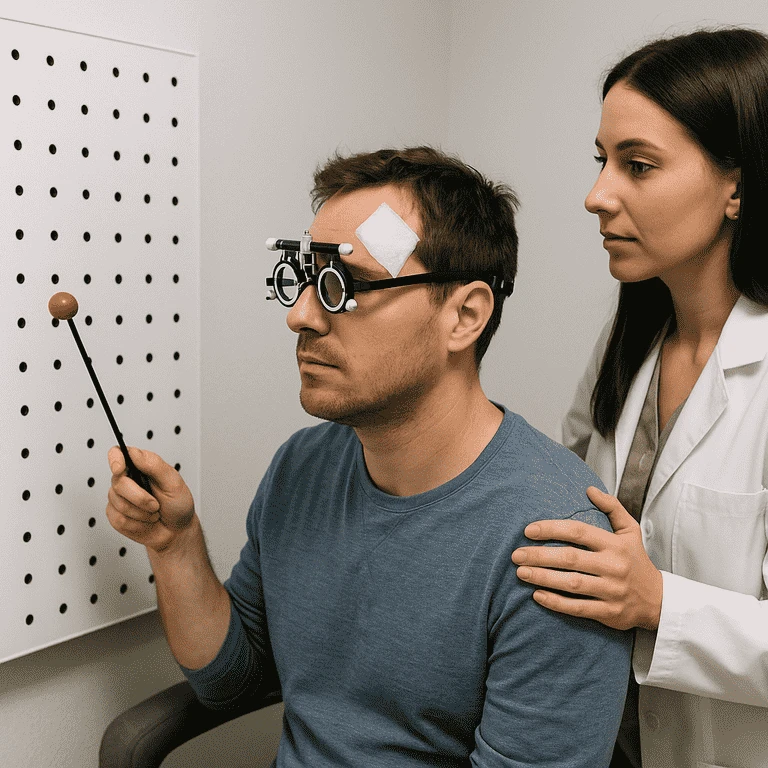
Vision therapy digs deeper. It finds exactly where things broke down - tracking, focus, depth perception. We start with precise tests, not guesswork. Each person's injury leaves different marks, so each treatment plan is different. At Active Eyecare of Surprise, we use advanced tools to spot problems that basic exams miss.
How Real Recovery Works
This isn't about basic eye exercises. We retrain your brain. You'll work with us in the office and practice at home. Each step builds on the last. Most people see changes within weeks - reading gets smoother, headaches back off, balance improves.
The Recovery Path Includes
- Deep testing of every visual skill
- Treatment built for you, not copied from a manual
- Direct work with experts who give instant feedback
- Specific exercises for home
- Regular progress checks to keep things on track
We rebuild from the ground up. Your brain learns to handle visual information correctly again. Tasks that seemed impossible - reading, driving, shopping - become normal again. Our team guides you through each step, backing you up with expertise and support.
Real Life Gets Better
The changes show up where they matter. Reading without strain. Driving confidently at night. Using computers without pain. Work improves. Social life opens up. Daily tasks stop being battles.
Here in Surprise, patients tell us the same thing: life felt small before therapy. After a few months, possibilities open up. Normal tasks stop draining all their energy.
What Makes This Different
Cookie-cutter solutions fail. Each injury affects vision differently. We start with thorough testing, careful listening, and build a plan that fits you - not some average patient.
- We track every improvement
- Use real measurements, not guesses
- Adapt to your life demands
- Keep working until you hit your goals
Your brain can heal and adapt. With the right help, even tough symptoms improve. We aim for full recovery, not just getting by. At Active Eyecare of Surprise, we stick with you until you reach your goals.
Take The First Step
Living with broken vision drains you. The right treatment changes everything. Neuro-optometric rehab offers a clear path forward. No tricks. No empty promises. Just proven methods that work.
Start Your Recovery
Ready to fix your vision? Call Active Eyecare of Surprise at 623-214-0353 or contact us today.
‹ Back
Recent Posts
-

Can Vision Therapy in Surprise Help with Focus & Attention?
September 11, 2026
-
Does Your Child Need Pediatric Eye Care in Surprise?
August 28, 2026
-
Thinking About Switching to Contact Lenses in Surprise?
August 14, 2026
-
Are Headaches a Sign You Need an Eye Exam in Surprise?
July 31, 2026
-
Do You Need a Vision Test in Surprise for DMV Renewal?
July 17, 2026