

By using our website, you agree to the use of cookies as described in our Cookie Policy
Is Your Child’s Vision in Surprise Ready for the School Year?
Most parents think back-to-school prep is about backpacks and pencils. Supplies in, schedules out. But your child's eyes tell a different story — and if you're not paying attention, you're setting them up for struggle. Vision problems don't always announce themselves with obvious symptoms, but they do leave a mark on report cards. Especially if your kid is squinting at the board or losing their place while reading.
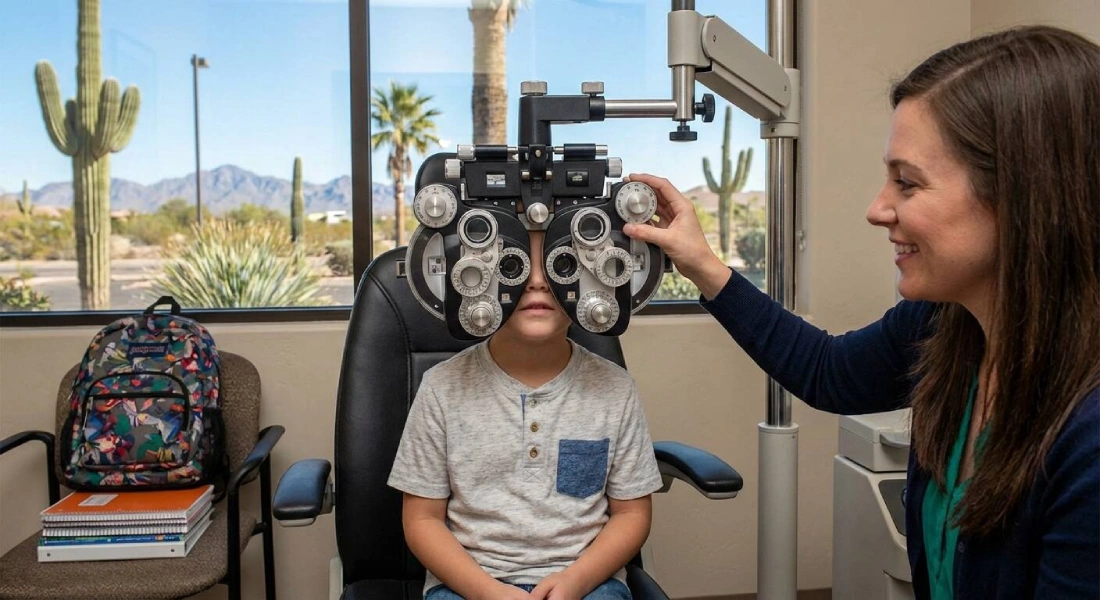
So here's what matters. If your child is heading into a classroom where 80% of learning happens visually, that's not the time to guess about their eyesight. Every blurry letter should raise a flag. Every headache needs context. And every academic decision should be grounded in whether they can actually see what they're supposed to learn — not just whether they passed a quick screening at school.
When a Screening Isn't Enough
Nine times out of ten, school vision checks aren't comprehensive. They test distance vision, maybe catch nearsightedness — that's it. The nurse doesn't have time to evaluate eye coordination, depth perception, or how well your child tracks words across a page. Those gaps matter.
But if your child struggles with focus or comprehension? Different issue entirely. Undiagnosed vision problems can look like behavior issues, especially if the struggle didn't show up on a basic chart test. We see this play out every school year. Plenty of kids get labeled as distracted or slow readers — they're not. And when vision gets properly assessed, parents realize the real problem was sitting right in front of them the whole time.
The Signs You Shouldn't Ignore
You can't write off constant eye rubbing as just a habit — that's often a red flag. Same goes for sitting too close to screens or holding books at odd angles. Kids don't always know how to explain what's wrong, so we have to watch for the clues.
Here's where behavior tells the story:
- Frequent squinting or blinking during reading or screen time
- Avoiding homework or activities that require close-up focus
- Complaining about headaches, especially after school
- Covering one eye to see better or tilting their head consistently
- Losing their place while reading or skipping lines
What a Real Eye Exam Catches
Want to know if your child's vision is actually ready for the classroom? You'll need more than a five-minute screening. A comprehensive eye exam digs deeper — checking how the eyes work together, how they focus, and whether there's any underlying issue that could interfere with learning.
The American Optometric Association recommends exams at six months, age three, and before kindergarten. After that, annual checkups keep things on track. Most vision problems don't fix themselves, and catching them early makes all the difference. If your child already wears eyeglasses, an updated prescription before school starts isn't optional — it's essential.
Surprise Brings Its Own Challenges
Living in Surprise means your child's eyes face more than just classroom strain. The Arizona sun is relentless, and UV exposure adds up fast. If your kid spends time outside — and they should — sunglasses with proper UV protection aren't a luxury. They're a necessity.
Sports and outdoor play also increase the risk of eye injuries. Protective eyewear isn't just for kids with glasses. It's for anyone who could take a ball, elbow, or branch to the face. One hit can cause damage that lasts a lifetime, so don't skip the gear just because your child has perfect vision.
Supporting Vision at Home
Your child's eye health doesn't stop at the optometrist's office. Daily habits shape how well their eyes hold up under the demands of school, screens, and homework. Small adjustments make a real difference over time.
Here's what works:
- Enforce the 20-20-20 rule during screen time — every 20 minutes, look at something 20 feet away for 20 seconds
- Set up homework spaces with bright, even lighting to reduce strain
- Stock the fridge with leafy greens, fish, and colorful vegetables that support eye health
- Teach kids not to rub their eyes and to wash hands regularly to avoid infections
- Watch for sudden changes in grades or attitude that could signal vision trouble
When Glasses Become Part of the Plan
If your child needs corrective lenses, getting them before the first day of school changes everything. Waiting until mid-semester means weeks of missed information, frustration, and falling behind. And if they already wear glasses, an outdated prescription can be just as bad as no glasses at all.
Frames matter too. Kids are rough on eyewear, so durability counts. Look for flexible materials, scratch-resistant lenses, and a fit that stays put during recess. If your child resists wearing glasses, involve them in choosing the frames. Ownership helps with compliance.
The Cost of Waiting
Putting off an eye exam because your child "seems fine" is a gamble you don't want to take. Vision problems don't always come with obvious symptoms, and by the time a teacher notices your child struggling, they've already missed critical learning time. The earlier you catch an issue, the easier it is to correct.
We've seen too many kids labeled as slow learners or troublemakers when the real issue was sitting on the bridge of their nose the whole time. A simple exam clears up the mystery and gives your child the tools they need to succeed. That's not dramatic — it's just how vision works.
Finding the Right Optometrist in Surprise
Not all eye exams are created equal, and not all optometrists specialize in pediatric care. Look for a provider who knows how to work with kids, who takes the time to explain findings, and who offers flexible scheduling for busy families.
Ask about:
- Experience with school-age children and common vision issues
- Availability of kid-friendly frames and lens options
- Insurance acceptance and payment plans if needed
- Follow-up care if your child needs vision therapy or additional support
- Emergency availability for injuries or sudden vision changes
Building Habits That Last
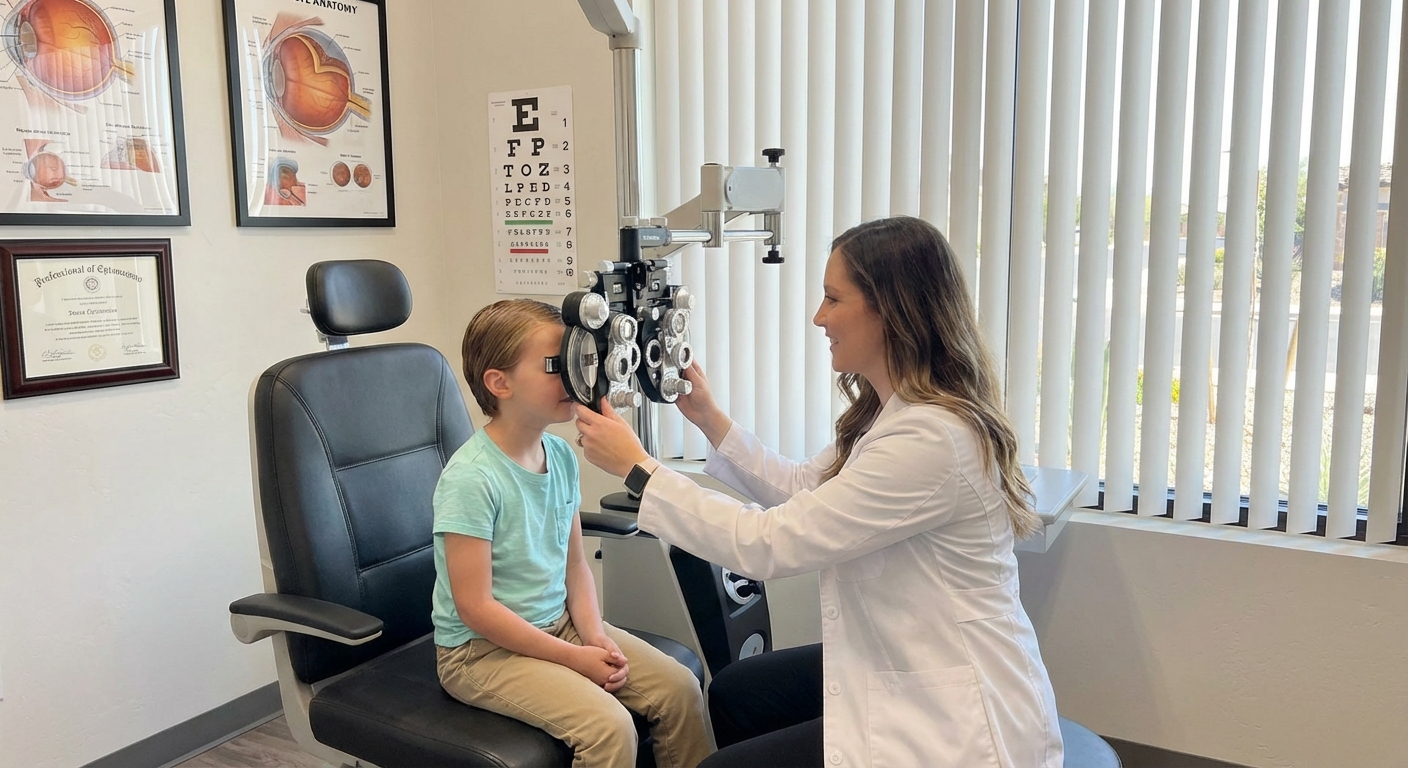
Getting your child's vision checked before school starts is step one. Maintaining healthy eye habits throughout the year is what keeps them on track. Regular exams, protective eyewear, screen breaks, and good nutrition all add up to stronger vision and better performance in the classroom.
We help parents in Surprise understand that pediatric vision care isn't a one-time event. It's an ongoing commitment that pays off in confidence, comprehension, and academic success. Your child deserves to see clearly — not just on the eye chart, but in every lesson, every book, and every opportunity that comes their way this school year.
Take Action Before the Bell Rings
The school year waits for no one, and neither should your child's eye exam. Schedule an appointment with a trusted optometrist in Surprise now, before the rush hits and availability shrinks. A clear view of the board, the page, and the world around them isn't just nice to have — it's the foundation for everything they'll learn this year. Don't let blurry vision hold them back when the solution is sitting in an exam chair waiting to be discovered.
Let's Set Your Child Up for Success
We know how much you want your child to thrive in the classroom and beyond. Let’s make sure their vision is one less thing to worry about this school year. If you’re ready to give your child the clear sight they deserve, call us at 623-214-0353 or book an appointment today. Together, we’ll help your child see every opportunity that comes their way.
‹ Back
Recent Posts
-

Can Vision Therapy in Surprise Help with Focus & Attention?
September 11, 2026
-
Does Your Child Need Pediatric Eye Care in Surprise?
August 28, 2026
-
Thinking About Switching to Contact Lenses in Surprise?
August 14, 2026
-
Are Headaches a Sign You Need an Eye Exam in Surprise?
July 31, 2026
-
Do You Need a Vision Test in Surprise for DMV Renewal?
July 17, 2026