
By using our website, you agree to the use of cookies as described in our Cookie Policy
Customized Vision Therapy Programs in Surprise
Vision therapy offers Surprise residents a non-surgical approach to improving visual function and comfort. At Active Eye Care of Surprise, we provide specialized vision therapy for adults and children. Our programs address various vision problems that can affect daily activities, learning, and work performance. Through tailored exercises and techniques, we help patients develop and strengthen their visual skills, leading to improved eye coordination, focus, and overall visual efficiency.
The Eye-Brain Connection: A Neurological Perspective
The eyes are derived from neural tissue and are an extension of the brain, which means some eye conditions can be linked to neurological conditions or developmental issues. Recent research has shown that certain eye diagnoses may precede the identification of neurological conditions. This connection allows us to use vision and lenses to change the brain's perception and help it work more efficiently.
As optometrists, we utilize several factors to better connect the pathway between the brain and vision. These can include lens prescriptions, colored tints, prisms or microprisms, color filters, vision therapy, and neuro-optometric rehabilitation. Each person receives a unique protocol and treatment plan based on their diagnosis, designed to improve their day-to-day lives.
Vision Therapy for Children in Surprise: Enhancing Learning & Development
Our vision therapy for children is particularly beneficial for those struggling with learning difficulties. By addressing underlying visual problems, we can significantly improve a child's reading speed, comprehension, and overall academic performance. Our child-friendly approach ensures that young patients feel comfortable and engaged throughout their therapy journey.
- Improves reading speed and comprehension
- Enhances hand-eye coordination for better sports performance
- Reduces eye strain and fatigue associated with digital device use
- Alleviates symptoms of visual processing disorders
- Boosts confidence in academic settings
Personalized Vision Therapy Exercises in Surprise, AZ
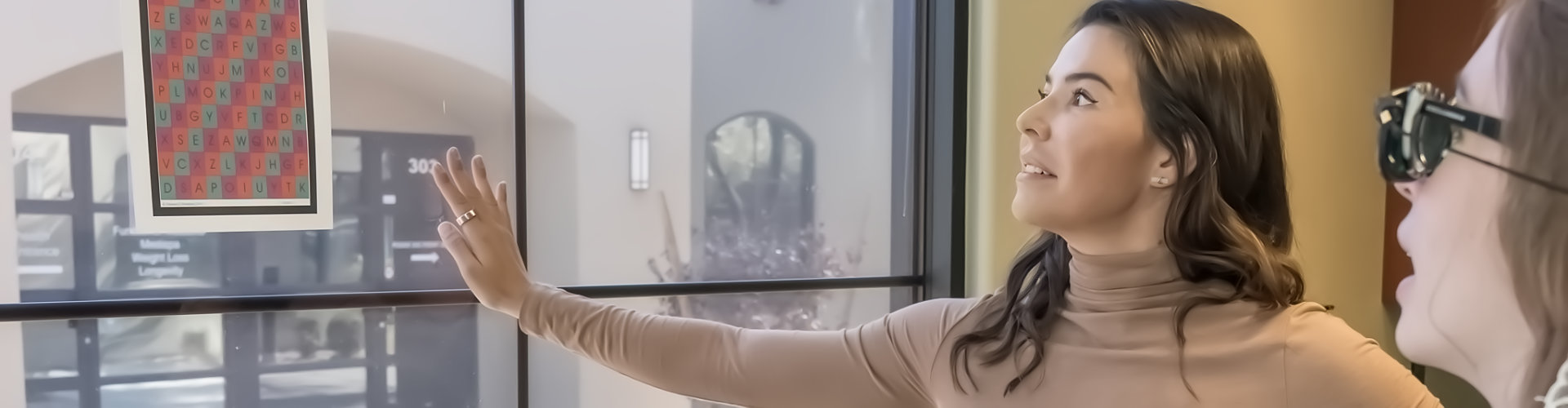
At Active Eye Care of Surprise, each vision therapy program is tailored to the individual needs of the patient. Our optometrists conduct thorough evaluations to identify specific visual deficiencies and create a targeted treatment plan. Our vision therapy exercises incorporate a variety of tools and techniques designed to retrain the visual system and improve overall visual function.
- Computerized vision therapy exercises for precision training
- Balance board activities to enhance visual-vestibular integration
- Specialized lenses and prisms for visual perception training
- Eye-hand coordination exercises using various tools
- Visual memory and processing speed enhancement activities
Vision Therapy & Neuro-Optometric Rehabilitation: Physical Therapy for Your Eyes and Brain
We often describe vision therapy and neuro-optometric rehabilitation as physical therapy for your eyes and brain. As we grow, we sometimes develop coping mechanisms that help us during times of stress or trauma. However, if these mechanisms become long-term, they can turn into inefficiencies and make us work harder. Our job is to help you and your vision return to normal, making everyday life easier. In some cases, these techniques can even be used to enhance already proficient visual systems, such as in advanced sports training.
Conditions Benefiting from Vision Therapy
Vision therapy can be beneficial for a wide range of conditions affecting visual function and comfort. Some common conditions that can improve with vision therapy include:
- Lazy Eye (Amblyopia)
- Eye Turns (Strabismus)
- Binocular Vision Disorder
- Concussion and Brain Injury (TBI/ABI)
- Visual Aura and Visual Snow Syndrome
- Depth Perception Issues
- Migraines from Visual Etiology
- Tracking Issues
- Sports Vision Enhancement
- Double Vision or Shadowed Vision
- Fixation Disorders
- Demyelinating Neurological Conditions
- Visual Neglect
- Midline Shifts
- Vision-Related Dizziness
- Reading Issues
Common Symptoms Addressed by Vision Therapy
Patients experiencing the following symptoms may benefit from vision therapy:
- Light Sensitivity
- Dizziness
- Headaches
- Blurred Vision
- Difficulty Reading or Using Fingers to Read
- Trouble Remembering Recently Read Material
- Focusing Problems
- Words Appearing to Move on the Page
- Fluctuating Focus
- Double Vision
- Frequent Collisions with Objects or Walls
- Misplacing Objects
- Head Tilt
- Reduced Peripheral Vision Awareness
- Difficulty Catching Objects
- Motion Sickness
- Intolerance to 3-D Movies
- Excessive Head Movement
- Trouble Estimating Distances
Preparing for Your Vision Therapy Evaluation
Before scheduling a vision therapy evaluation, it's important to have had a comprehensive eye exam within the past 6 months. This ensures we have the most up-to-date information about your eye health and can accurately diagnose any visual issues that may impact testing. If your comprehensive eye exam was performed elsewhere, please send us these records before your evaluation.
Choosing the Right Doctor for Vision Therapy
When selecting a doctor for vision therapy, consider their credentials, training, and continuing education. Resources such as the College of Vision Development and the Neuro-Optometric Rehabilitation Association can provide valuable information about qualified practitioners.
Start Your Vision Therapy in Surprise, AZ
Improve your visual skills and enhance your quality of life with vision therapy at Active Eye Care of Surprise. Our experienced optometrists are ready to create a personalized therapy program tailored to your specific needs. Don't let vision issues hold you back. Contact Active Eyecare of Surprise at 623-214-0353 to book an appointment and take the first step towards better visual function.