

By using our website, you agree to the use of cookies as described in our Cookie Policy
What Parents in Surprise Should Know About Pediatric Vision Care
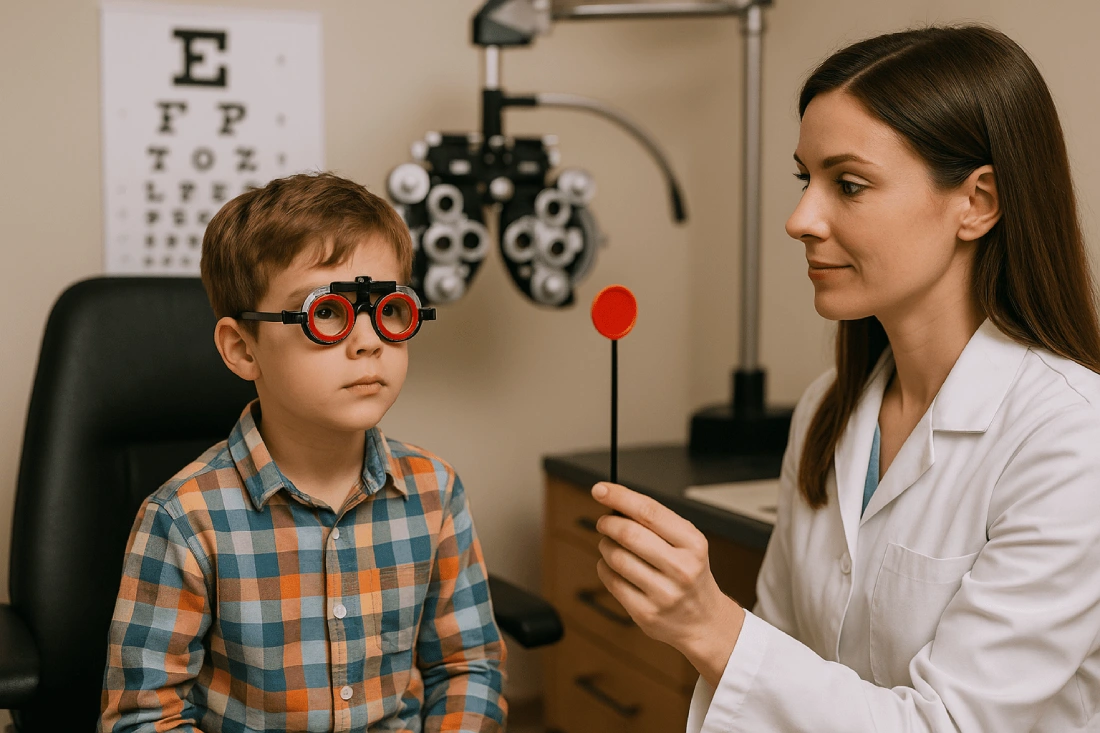
Kids can ace a vision screening and still struggle with reading, sports, or even just keeping their place on a page. The usual eye test doesn’t catch everything. When a child loses their spot while reading, can’t follow a ball, or gets frustrated with homework, vision is often the reason. These issues don’t show up on a standard exam. Our vision therapy treatments go after the real problems that hold kids back.
- Eyes jump or skip lines during reading
- Hand-eye coordination falls apart in sports
- Focus drifts during homework or classwork
- Depth perception feels off. Stairs, curbs, and playgrounds become tricky
- Visual memory struggles. Can’t recall what was just seen
- Eyes don’t work together. Double vision, squinting, or closing one eye
Vision problems affect every part of a child's daily life. Poor eyesight makes sports harder, reading less fun, and social time more confusing. When kids get comprehensive eye exams, we catch these issues fast. Quick action turns struggles into success stories.
Vision Therapy Builds Skills That Last
Vision therapy teaches your eyes and brain to work as a team. Each practice session includes hands-on tasks - you might follow a moving ball, switch your focus between different spots, or train both eyes to work together. The training is step-by-step, not rushed. When kids keep at it, their brain picks up these new skills for good, changing how they see and process what's around them.
Every child’s needs look different. Some need to strengthen eye muscles. Others need to sharpen focus or improve how their eyes team up. Our medical eye care knowledge shapes each plan. We use proven tools and technology, but the real results come from consistent, guided practice. Kids start to read smoother, move with more confidence, and tackle schoolwork without the old roadblocks.
Spot the Signs Before School Struggles Take Over
Children show vision problems through actions, not words. Watch for the signs: a head turned sideways while reading, constant eye rubbing, or putting off homework that needs close focus. When a child gets called "clumsy" or "can't pay attention," their eyes might be the real issue. Today's screens make things worse - kids end up with tired eyes, blinking at fuzzy words. If you spot these signs or notice your child struggling with digital eye strain, it's worth checking their vision.
- Frequent blinking or eye rubbing
- Covering one eye to see better
- Short attention span for reading or puzzles
- Complaints of double vision or words moving on the page
- Unexplained headaches, especially after school
- Reluctance to try new activities that require focus
These aren’t just quirks. They’re signals that the visual system needs help. Early intervention makes a difference. Kids don’t outgrow these problems. They adapt, often by working twice as hard as their peers.
Vision Shapes Every School Day
Struggling readers aren’t always behind in intelligence or effort. Visual processing issues slow them down. When eyes can’t track smoothly, reading becomes a chore. Math problems get skipped. Copying from the board turns into a guessing game. Frustration builds, and confidence drops. Our neuro-optometric rehabilitation helps students break through these barriers. The changes show up in grades, but also in attitude. Kids who once dreaded homework start to finish assignments without meltdowns. Teachers notice sharper focus and better participation. Parents see less resistance and more satisfaction in their child’s work.
- Reading speed and comprehension improve
- Handwriting gets neater
- Test scores climb
- Kids join in sports and group activities with new confidence
Vision therapy doesn’t just patch up a problem. It gives kids the tools to keep up, catch up, and move ahead.
Why Early Action Matters in Surprise
Waiting for a child to “grow out of it” wastes time. The longer vision problems go unchecked, the more they shape learning and self-esteem. In Surprise, families juggle busy schedules, but skipping a thorough eye evaluation leaves too much to chance. Kids who get help early avoid years of frustration. They build skills that last through every grade and every sport. The difference shows up at home, in the classroom, and on the field.
Vision therapy isn’t a shortcut. It’s a decision for real progress. The payoff is clear. Kids who see well, learn well, and live with confidence.
Ready to Help Your Child Thrive in Surprise?
Call Active Eyecare of Surprise at 623-214-0353 or book an appointment to see how vision therapy can transform your child's visual capabilities.
‹ Back
Recent Posts
-

Is It Time for New Eyeglasses in Surprise?
September 25, 2026
-

Can Vision Therapy in Surprise Help with Focus & Attention?
September 11, 2026
-
Does Your Child Need Pediatric Eye Care in Surprise?
August 28, 2026
-
Thinking About Switching to Contact Lenses in Surprise?
August 14, 2026
-
Are Headaches a Sign You Need an Eye Exam in Surprise?
July 31, 2026