

By using our website, you agree to the use of cookies as described in our Cookie Policy
Does Your Child Need Pediatric Eye Care in Surprise?
Most parents keep up with vaccines and wellness visits. Vision? That's where things get murky. Your kid isn't going to tell you their left eye is weaker than their right. They'll just assume everyone sees the world in soft focus. And by the time a teacher notices they're squinting at the board, the problem's been there for months.
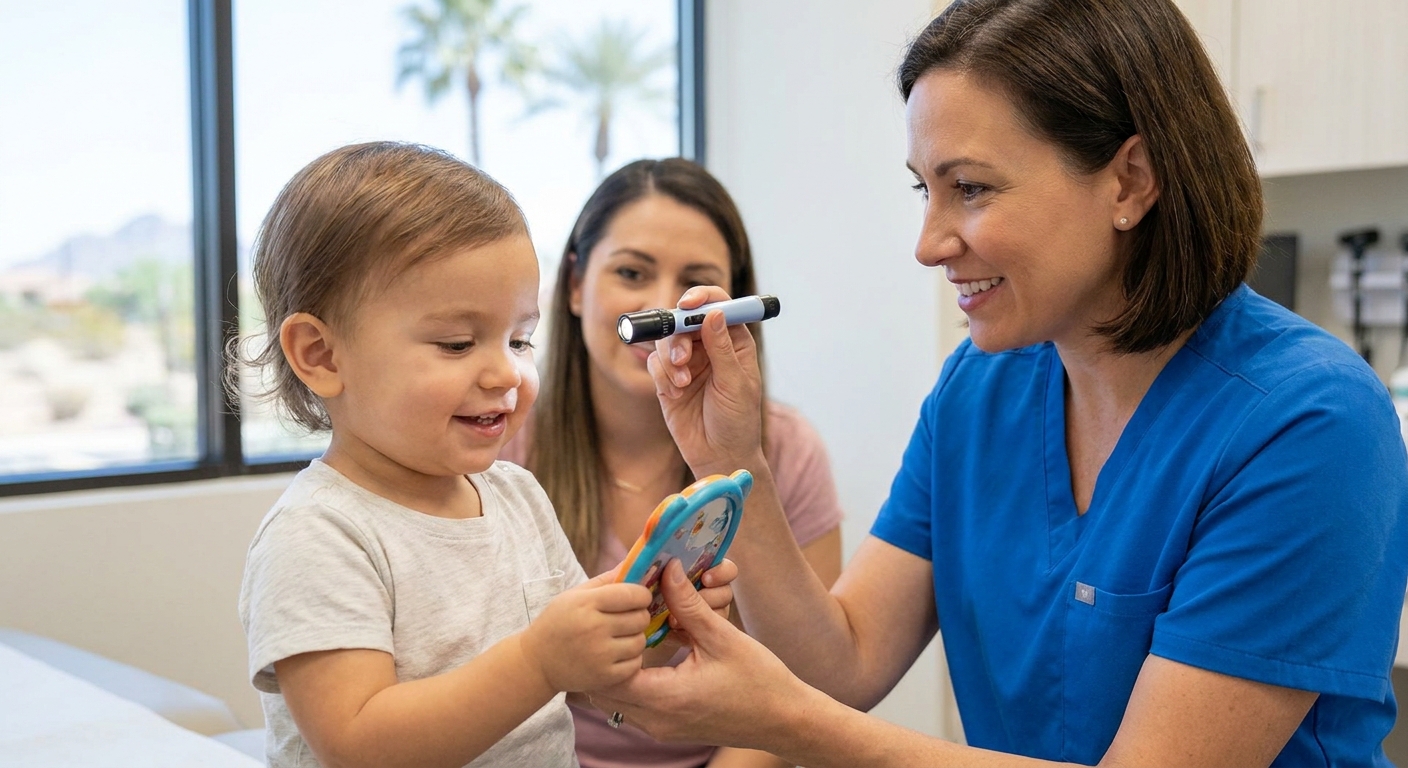
So here's the reality. Children's eyes aren't just smaller versions of adult eyes — they're still wiring up to the brain. Miss a critical window, and you're not just dealing with blurry vision. You're risking depth perception issues, reading delays, even behavioral red flags that look like ADHD but are actually just untreated eye problems. If you're in Surprise, getting your child proper eye care isn't optional. It's foundational.
Vision Problems Hide in Plain Sight
Kids adapt. That's the problem. If one eye isn't pulling its weight, the brain compensates. Your child learns to tilt their head, close an eye, or work twice as hard to focus — and they don't complain because they don't know any different. The issue only surfaces when performance drops or someone else catches it.
That's why routine exams matter. A pediatric eye specialist knows what to look for before symptoms show up. They're checking alignment, tracking, and how both eyes work as a team — not just whether your kid can read a chart. Early intervention fixes most problems. Late intervention? That's when you're managing consequences instead of solving root causes.
What Shows Up Most in Young Eyes
Some conditions appear more often than others, and each one carries its own risks if ignored. The sooner these get flagged, the better the outcome.
- Refractive errors like nearsightedness or astigmatism that blur distance or close-up vision
- Strabismus, where eyes don't line up and one drifts inward or outward
- Amblyopia, the brain favoring one eye and shutting down input from the other
- Blocked tear ducts causing chronic watering or infection risk
- Pediatric cataracts or congenital issues that need surgical attention
The Red Flags Parents Miss
Your child won't march up and say, "Mom, I think my vision's off." They'll show you in other ways — ways that look like everything except an eye problem. These behaviors are loud once you know what to listen for.
- Frequent squinting or tilting the head to see clearly
- Sitting inches from the TV or holding books against their nose
- Rubbing eyes constantly, especially after reading or screen time
- Complaining about headaches or saying their eyes feel tired
- Struggling with focus during homework or zoning out in class
- Covering one eye to improve clarity
- Eyes that don't track together or seem misaligned
If two or more of these sound familiar, schedule an exam. Don't wait for the school screening — those catch the obvious cases, not the nuanced ones. Understanding common eye problems in children can help you recognize when professional evaluation is necessary.
When the First Exam Should Happen
The American Optometric Association lays it out clearly. First comprehensive exam at six months. Another at age three. Then right before kindergarten kicks off. After that, annual visits keep things on track — or more often if glasses are in play or family history suggests higher risk.
Most parents skip the infant exam. Big mistake. Even babies can have eye issues, and catching them early prevents developmental delays. Knowing when your child should have their first eye exam can help you stay ahead of potential problems. The earlier you start, the fewer problems compound down the line.
Inside a Pediatric Eye Exam
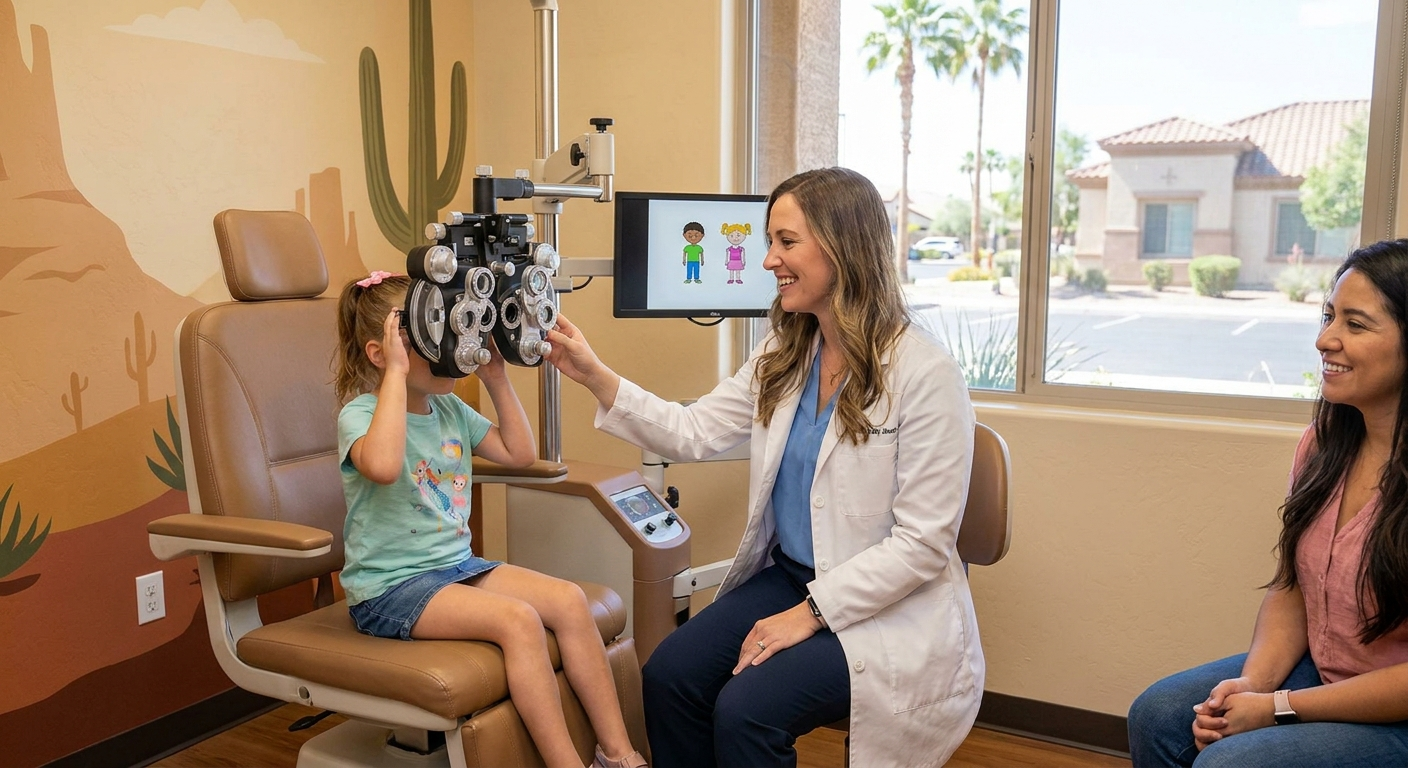
These aren't the same as adult exams. Pediatric specialists use tools and techniques designed for kids who can't sit still or read a chart. Expect picture cards, moving lights, and quick assessments that feel more like play than medical testing.
The doctor checks vision clarity, eye alignment, how well the eyes track moving objects, and overall eye health. If corrective lenses are needed, they'll explain options that fit your child's age and activity level. A comprehensive eye exam ensures nothing gets overlooked. No upselling. Just what works.
What Happens When Vision Gets Fixed Early
Good vision isn't a luxury — it's the foundation for learning. Reading, writing, hand-eye coordination, even social cues depend on clear sight. Kids who can't see well fall behind academically, struggle in sports, and often withdraw socially because everything feels harder.
- Better reading comprehension and faster learning in school
- Improved hand-eye coordination for sports and daily tasks
- Fewer headaches and less eye strain during homework
- More confidence in social settings and group activities
- Prevention of long-term vision issues that get harder to treat later
Picking the Right Eye Care Provider
Surprise has solid options, but not all eye doctors work well with kids. You want someone who knows pediatric development, not just vision correction. Ask your pediatrician for referrals. Talk to other parents. Check whether the practice handles common childhood conditions or just writes prescriptions.
Experience with children matters. So does the vibe. If your kid feels comfortable, exams go smoother and results are more accurate. Skip the practices that treat children like mini-adults — find the ones who actually specialize in young patients. Parents should know what to look for in pediatric vision care when choosing a provider.
The Window Closes Faster Than You Think
Critical visual development happens before age eight. After that, the brain's locked in. Amblyopia treated at age four? High success rate. Same condition treated at age ten? Much harder to reverse. The clock's ticking whether you notice symptoms or not.
That's why we push early exams and consistent follow-ups. You're not overreacting by scheduling an appointment. You're protecting your child's ability to learn, play, and navigate the world without unnecessary obstacles. If you notice signs it's time to see an eye doctor, don't delay — early detection makes all the difference. Vision care in Surprise is accessible — and waiting only shrinks the window for intervention. Get ahead of it now, while fixes are straightforward and outcomes are strong.
Let's Give Your Child the Clear Start They Deserve
We all want our kids to see the world clearly and confidently. If you have questions or concerns about your child's vision, let's address them together before small issues become big setbacks. Call us at 623-214-0353 to speak with our team, or book an appointment and take the first step toward healthy eyes and brighter futures for your family.
‹ Back
Recent Posts
-

Is It Time for New Eyeglasses in Surprise?
September 25, 2026
-

Can Vision Therapy in Surprise Help with Focus & Attention?
September 11, 2026
-
Does Your Child Need Pediatric Eye Care in Surprise?
August 28, 2026
-
Thinking About Switching to Contact Lenses in Surprise?
August 14, 2026
-
Are Headaches a Sign You Need an Eye Exam in Surprise?
July 31, 2026