

By using our website, you agree to the use of cookies as described in our Cookie Policy
Do You Need a Vision Test in Surprise for DMV Renewal?
Most drivers treat license renewal like a calendar event. Show up, pay the fee, walk out with a fresh card. But Arizona's DMV doesn't see it that way—and if you roll up unprepared, you're wasting a trip. Vision requirements aren't suggestions. They're gatekeepers. And whether you need to prove your eyesight depends on factors you might not even know are sitting in your file.
Here's what matters. If you're renewing in person or you've crossed a certain age threshold, expect a vision check. If you're doing it online and nothing's flagged, you might skate by. But don't assume. Every renewal is filtered through the state's safety standards—and those standards exist because blurry vision on the highway isn't just your problem.
Arizona Wants Proof You Can See the Road
Driving isn't a right you earn once and forget about. It's a privilege the state rechecks every few years. Vision testing is baked into that process because the DMV knows what happens when drivers can't read signs, spot pedestrians, or judge distance. Accidents pile up. Insurance claims multiply. People get hurt.
That's why Arizona requires minimum visual acuity before they hand you another card. It's not about bureaucracy—it's about keeping everyone safer when metal starts moving at speed. If your eyes can't meet the bar, the state won't let you behind the wheel until they do.
What the State Actually Requires
Arizona sets the line at 20/40 vision in at least one eye. Glasses count. Contacts count. Whatever gets you there is fine, as long as you bring them to your appointment. If you're corrected to that level, you're good. If you're not, you've got work to do.
- Online renewals under age 65 usually skip the vision test—unless your record shows a medical flag or prior vision issues.
- If you're 65 or older, or if you're renewing in person for any reason, the test is waiting.
- If the system thinks there's a concern, you're taking it no matter what.
How the Test Actually Works
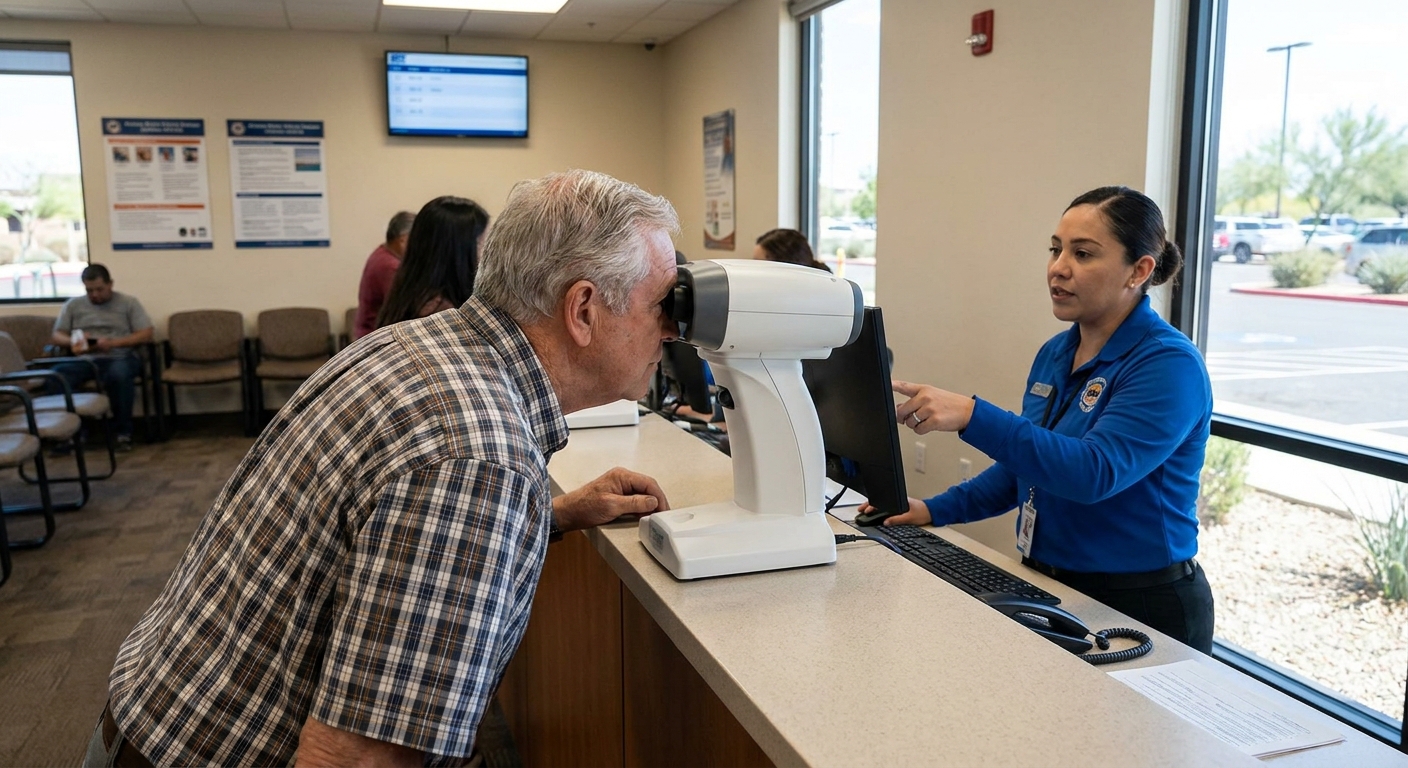
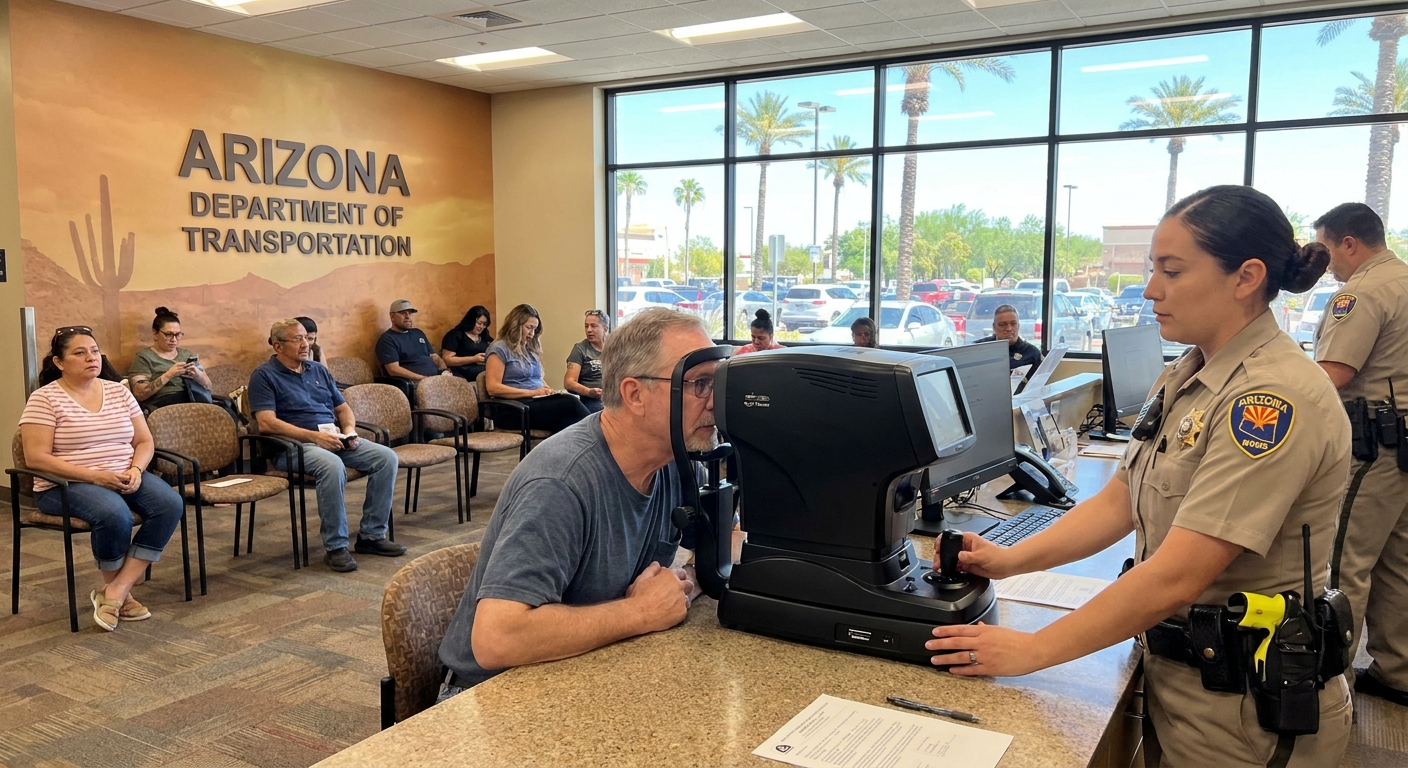
Walk into the MVD office and they'll point you toward a machine. You'll look through a viewer that displays letters or numbers in shrinking sizes. They'll ask you to read them aloud, sometimes covering one eye, sometimes using both. It checks sharpness and peripheral range—the basics that determine whether you can spot hazards before they become collisions.
Most people pass without drama. But if you stumble through the letters or can't make out the smaller lines, the clerk won't renew your license on the spot. They'll send you to an eye professional for a full exam, and you'll need documentation proving your vision meets the standard before you can come back and finish the process.
Bringing Your Own Exam Results
Don't want to take the DMV's test? Bring proof from your optometrist or ophthalmologist instead. A recent vision report—dated within the last three months—can substitute for the in-office screening. Just make sure it's signed, includes your corrected and uncorrected acuity, and clearly states whether you meet Arizona's requirements.
This route works especially well if you've got a known condition or if you just prefer dealing with your own doctor. It saves time at the counter and gives you control over the testing environment. But the paperwork has to be current and complete, or the DMV won't accept it.
When You Don't Make the Cut
Fail the vision test and your renewal stops cold. The state won't issue a new license until you fix the problem. That might mean updated eyeglasses, new contacts, or medical treatment if something more serious is going on. Once your vision meets the standard, you'll retake the test and move forward.
In some cases, the DMV issues restricted licenses. Daytime-only driving. Limited radius from home. Whatever keeps you legal without putting others at risk. These aren't punishments—they're safety measures. And if your vision improves later, you can apply to lift the restrictions.
Steps That Keep You Ahead of Problems
- Book regular eye exams, especially after age 50
- Wear your corrective lenses to every DMV visit
- Rest your eyes the night before to avoid strain-induced failures
- Carry a current vision report if you've had recent changes
- Address symptoms like blurriness or trouble with night driving immediately
Who Gets Flagged for Testing
Age is the biggest trigger. Turn 65 and the state assumes nothing about your vision. You're taking the test. But younger drivers can get flagged too—medical conditions, prior failures, accident history, or self-reported vision changes all put you on the list.
The DMV's system tracks more than you think. If something in your file suggests declining eyesight, you're not slipping through online renewal. You'll get routed to an in-person visit where the test is mandatory.
What Happens If You Skip It
Ignore the requirement and your license expires. Drive anyway and you're operating without a valid credential—which means tickets, fines, and liability exposure if anything goes wrong. Insurance won't cover you. Law enforcement won't give you a pass. And the longer you wait, the harder it gets to fix.
Some drivers assume they can just show up later and take care of it. But if your vision declines in the meantime, you might not pass when you finally do show. That's why proactive eye care beats reactive scrambling every time.
When to Call an Eye Professional First
- Your last exam was more than a year ago
- You've noticed changes in clarity, depth perception, or night vision
- You failed a previous DMV vision test
- You have diabetes, glaucoma, or another condition that affects eyesight
- You want documentation before stepping into the MVD office
Renewal Without the Guesswork
Vision testing isn't the complicated part. It's the lack of preparation that trips people up. Most drivers pass without issue because they know what's expected and they handle their eye care before the DMV becomes a bottleneck. If your vision's solid and your paperwork's in order, renewal is just a formality.
But if you're cutting it close—or if you've been putting off that overdue eye exam—now's the time to lock it down. Because the DMV doesn't negotiate on safety standards, and neither should you. Scheduling comprehensive eye exams is a smart move whether you're dealing with diabetes and eye health concerns or simply ensuring you're ready for vision testing in Surprise. Regular visits for eye exams in Surprise keep you ahead of DMV requirements and protect your long-term vision health. Show up ready, or don't show up at all.
Let's Keep Your Eyes on the Road
Staying ahead of DMV vision requirements is all about being proactive with your eye health. Let's make sure your next renewal is smooth and stress-free—schedule your exam with a team that understands what Arizona drivers need. Call us at 623-214-0353 or book an appointment today so we can help you see clearly and drive confidently.
‹ Back
Recent Posts
-
Is It Time for New Eyeglasses in Surprise?
September 25, 2026
-

Can Vision Therapy in Surprise Help with Focus & Attention?
September 11, 2026
-
Does Your Child Need Pediatric Eye Care in Surprise?
August 28, 2026
-
Thinking About Switching to Contact Lenses in Surprise?
August 14, 2026
-
Are Headaches a Sign You Need an Eye Exam in Surprise?
July 31, 2026