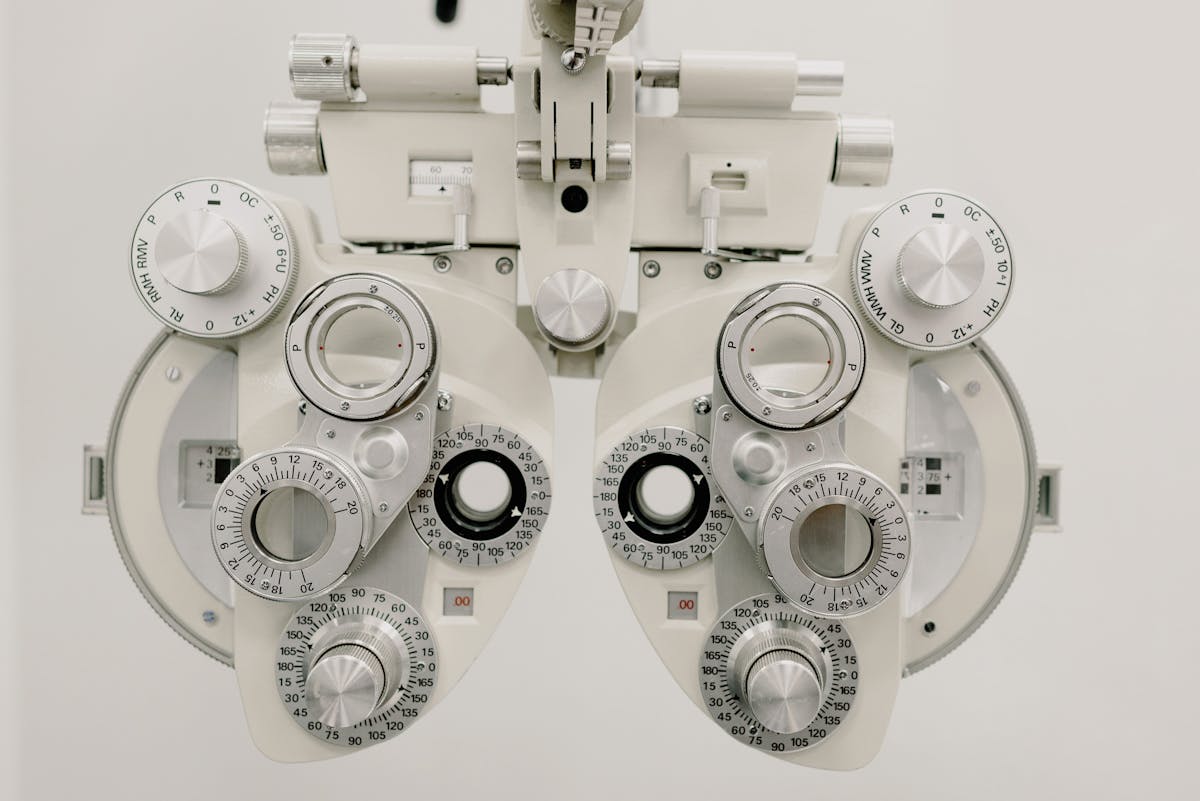
Binocular Vision Disorder/Sensorimotor Exams
Specialized testing to uncover how well your eyes work together — and identify disorders that affect focus, tracking, and coordination.
A binocular vision and sensorimotor exam evaluates how effectively your two eyes function as a coordinated team. It assesses eye alignment, focusing ability, eye tracking, convergence, and the brain's ability to process visual information from both eyes simultaneously.
Using a series of specialized tests, our optometrist measures how your eyes converge and diverge, how they follow moving targets, how quickly they shift focus, and how well they maintain alignment during near and distance tasks. This goes far beyond a standard vision check.
Binocular vision disorders can cause headaches, eye strain, double vision, difficulty reading, and poor depth perception — often without the patient realizing their eyes are to blame. An accurate diagnosis opens the door to targeted treatment, including vision therapy or prism lenses, that can dramatically improve daily function.
Answers to help
you make an informed decision.
Who might consider this treatment?
This exam is ideal for patients experiencing headaches, eye strain, double vision, difficulty reading, or trouble concentrating — especially when standard glasses or contacts don't seem to fully resolve the issue. It's also recommended for children struggling in school or adults with demanding visual tasks.
What is the typical experience?
The exam involves a series of comfortable tests where you'll be asked to follow targets, focus at different distances, and respond to what you see. There's no right or wrong — just honest responses that help our optometrist build an accurate picture of how your eyes work as a team.
How long does it usually take?
A binocular vision and sensorimotor exam typically takes 45 to 60 minutes, as it is more comprehensive than a standard eye exam. For complex cases, a second appointment may be needed to complete all components.
Is there anything to keep in mind?
Come prepared to describe your symptoms in detail — when they occur, how long they last, and what activities trigger them. This information is just as important as the test results in arriving at an accurate diagnosis.
What should I know about recovery after?
There's no recovery needed after the exam itself. If a treatment plan such as vision therapy or prism lenses is recommended, your optometrist will explain what to expect from that process and answer all your questions before you leave.